How to navigate risk and protect your real estate investments during a downturn
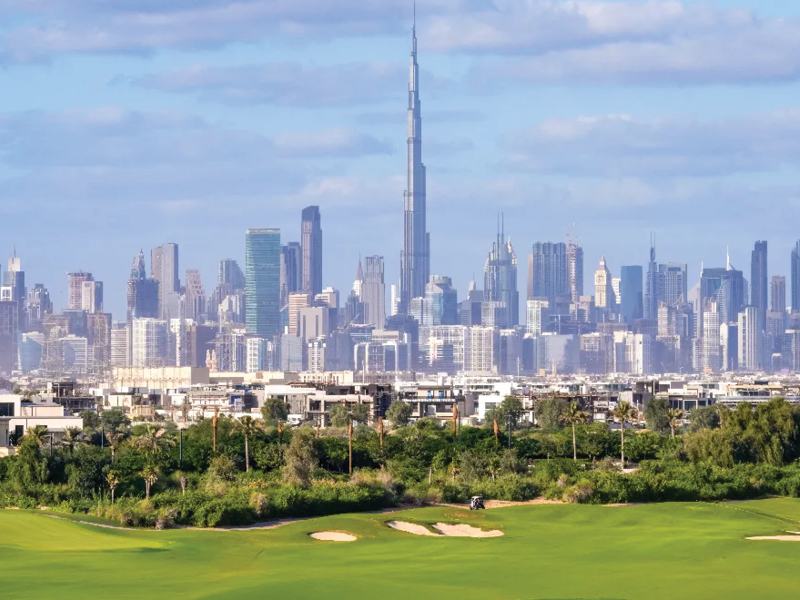
Everyone has an opinion about how the Dubai property market will hold up if the global economy slows down. You’ll hear everything from “it’s recession-proof” to “it’s overdue for a correction.” The truth, as it usually is, sits somewhere in between... often in the lap of experience.
Dubai isn’t untouched by the world around it. No market is. The city’s growth and investor confidence might make it look unshakable, and in many ways the fundamentals back that. But how Dubai responds during an economic slowdown is what truly sets it apart.
Putting your money in anyone’s hands is a risk but so is standing on the sidelines while opportunity keeps moving. As an investor, you know there’s a difference between confidence and immunity. One comes from strategy; the other from talk. Let’s talk about the difference between the two.
Understanding Dubai’s market cycles
Over the past few years, Dubai’s growth story has seemed unstoppable. Tourism has soared, population continues to rise and global investors still see the city as a tax-efficient, well-governed and constantly evolving safe haven. So, when headlines talk about global slowdowns, it’s easy to believe Dubai might simply glide through unscathed.
The market has matured and speculation has given way to data, regulation and long term vision. The city is better planned to support population growth, with stronger infrastructure, clearer policy frameworks such as Vision 2040 and the Economic Agenda D33, along with buyers who are better informed.
Still, in any market, real strength isn’t necessarily about constant acceleration. What many mistake as a cause for concern, such as stabilisation or slower price growth, is often a sign of balance, not fragility.
Dubai learned that the hard way.
When stability isn’t the same as safety
If you were here during the global financial crisis of 2008, you’ll remember how the Dubai property market crash tested every investor’s nerve and reshaped the way the city builds today. Construction halted, liquidity froze and confidence disappeared almost overnight.
We saw echoes of that again in 2020 when COVID-19 brought the world to a standstill. Many global markets struggled to restart, yet Dubai - as it often does - rebounded far faster than expected. An influx of high-net-worth individuals, regional dynamics and the return of Chinese investors drove demand up, while delayed construction during lockdowns tightened supply.
Dubai delivered around 32,000 units in 2018 and 56,000 in 2019 - the peak before the pandemic. In comparison, 47,000 units were delivered in 2020 and 38,000 in 2021. COVID-19 did disrupt construction, but the impact on overall deliveries was far less severe than anticipated. Even with the slowdown, a substantial number of homes still entered the market.
Confidence returned quickly as projects resumed, buyers re-entered the market and momentum built on strong fundamentals rather than speculation.
Resilience by design
It is natural to feel a sense of déjà vu when headlines speculate about economic uncertainty and shifting global sentiment. The signals may look familiar, but today’s market stands on a very different foundation.
Oversupply risks are monitored because the DLD and RERA approve and supervise every project, and escrow funds are only released when verified construction progress is made. Demand is also far more diversified, with buyers coming from across the world to invest or to live in Dubai. History shows that each correction has ultimately laid the groundwork for more sustainable growth.
What matters now is the structure supporting that demand. Long term residency pathways like the Golden Visa, investor friendly ownership laws and a stable, tax efficient framework continue to attract international capital. Population growth, sustained migration and major infrastructure projects also strengthen the city’s underlying demand, even when global sentiment turns cautious.
Key risks investors should consider
The truth is, there’s no such thing as a risk-free market, only an informed one. Headlines can unsettle even steady investors, fuelling pessimism and rushed decisions, yet true downturns rarely announce themselves. Don’t mistake the emotion of a downturn for the reality of one.
Advice is what counts. At haus & haus, we look at the indicators like liquidity, developer performance and financing conditions to help our clients make confident decisions, whatever the market is doing.
As Simon Baker, Managing Director of haus & haus, says: “We guide our clients based on their investment goals and what the market is telling us. No exception. That’s how we’ve earned the trust of our clients over the last 12 years.”
The real question is not whether risk exists; it’s where it sits. These are the areas every investor should keep an eye on, especially in periods of stabilisation.
Project and developer risk
No one likes a broken promise. If there’s one thing we tell every client, it’s to ALWAYS vet your developer.
Ask the right questions:
- Do they deliver on time?
- What do their handovers actually look like?
- How many years have they been in the market
- What kind of after-sales support do they provide?
Reputation is your first line of protection in Dubai’s Off Plan market. The difference between a trusted developer and an overextended one can mean the difference between long term value and unnecessary risk.
There are plenty more questions you shouldn’t have to figure out on your own. Save yourself time, stress and potential missteps and work with a certified consultant.
Liquidity and exit risk
Liquidity naturally shifts when markets do. In slower periods, resale timelines can stretch and buyers become more selective. But softness in certain segments can sit alongside strength in another. For example, established, high-demand communities often behave differently when the market cools.
Branded residences and centrally located, well-connected communities typically command higher price premiums and stronger long term value. Buyers pay more for convenience, lifestyle and brand assurance, which can make these properties more likely to retain demand and value through market shifts.
We recently advised a client not to buy into an Off Plan project that looked appealing on paper but was already becoming oversaturated. As Paul Sharland, Off Plan Director at haus & haus, explains: “Right now, selectivity is everything. Sometimes the smartest move is waiting for the right opportunity.”
Turning risk into opportunity
Downturns often reveal opportunities that aren’t visible when everyone else is buying at pace. As global interest rates rise, borrowing becomes more expensive, demand naturally eases and price growth flattens. That shift in urgency creates space for thoughtful buyers to negotiate, assess options and choose well, making stabilisation a strategic entry point.
Lower entry prices, more flexible payment options and a calmer market create the breathing space many investors need to make their next smart move.
For some, this might be a season to sell. For others, it could be the right moment to buy or rebalance. There’s no single solution, which is why we look at each portfolio individually. Sometimes we’ll advise holding through fluctuating market conditions; other times we’ll suggest trimming what’s unlikely to withstand a shift. The goal isn’t to chase momentum, but to protect value.
What separates those who succeed from those who panic is perspective and preparation. So, when it does slow down just long enough, use it as a time to plan your next decisive step.
Long term approach over short term fear
If you’re holding property, rental demand often becomes your safety net. When mortgage rates rise, many buyers delay purchasing and return to renting, which can actually strengthen yields in certain segments.
Build a strong financial foundation
A solid investment starts with steady footing. In a shifting market, how you finance can matter as much as what you buy.
Keep your loan-to-value ratios manageable and always maintain a reserve for the unexpected. Fixed-rate mortgages can provide stability when interest rates fluctuate and flexible repayment options give you breathing room if the landscape changes. The goal isn’t to stretch as far as you can, it’s to stay comfortable enough to make clear decisions.
With the right foundation and the right perspective, shifts become opportunities, not setbacks. The key is knowing when to hold steady, when to act and who to have in your corner when it matters most.
Markets move; they always have
The Dubai property market has proved time and again that every economic downturn brings lessons and opportunities. If you’d like to discuss your property investment in Dubai or simply want an experienced perspective before making your next move, our team is here to help.
And if you choose to go it alone, at least promise yourself this: don’t make emotional decisions.
FAQs about the Dubai property market and downturns
Dubai’s fundamentals and ongoing reforms are in place in Dubai to protect investments. Moderate corrections are normal and often healthy for long term sustainability.
Oversupply in certain segments and global rate fluctuations can affect performance, but strong locations and quality developments continue to hold value.
Diversify, buy selectively and think long term. We help investors balance portfolios so short term noise does not disrupt long term goals.
Because emotion and headlines move faster than data. Our consultants help you focus on facts, timing and strategy, not fear.