How the new Etihad Rail network could contribute to Dubai’s real estate market
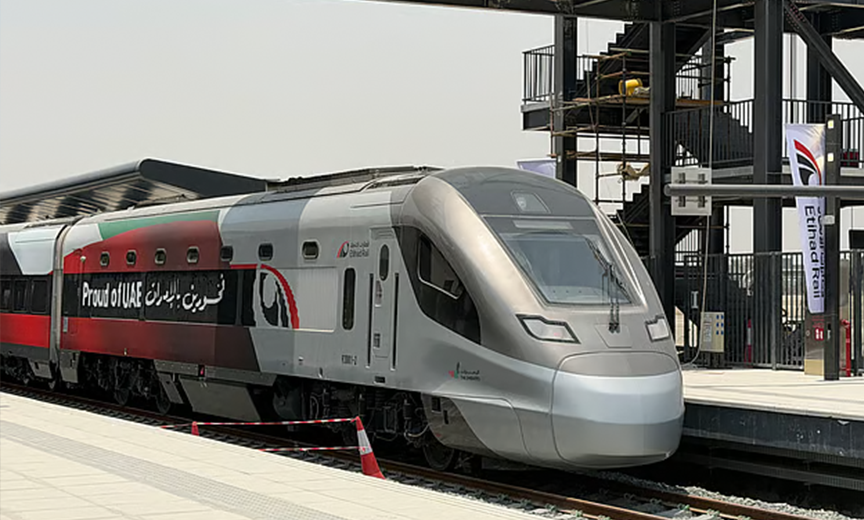
Dubai is now more closely connected to the rest of the UAE by rail. Al Yalayis Station at Jumeirah Golf Estates opened on 30 September 2026, connecting Dubai with Mohammed Bin Zayed City in Abu Dhabi in around 57 minutes and extending the national passenger network into the emirate.
But Al Yalayis is only part of the longer term picture. Dubai is expected to have four stations linked to Etihad Rail: two associated with the national passenger network and two planned for the separate high speed Dubai–Abu Dhabi rail project.
For the property market, better rail access could change how residents think about commuting, where they choose to live and how easily different parts of Dubai connect with employment, airport and business hubs. It does not mean property prices around every station will automatically rise.
Where will Dubai’s four Etihad Rail-linked stations be?
It is important to distinguish between the national passenger rail network and the planned high speed Dubai–Abu Dhabi railway.
- Al Yalayis at Jumeirah Golf Estates – national passenger rail, opened 30 September 2026.
- A future national network interchange indicated around Meydan on Dubai’s 2032 rail network plan; the second conventional station has not yet been formally named.
- Al Maktoum International Airport – planned high speed rail station.
- Al Jaddaf – planned high speed rail station.
RTA has also confirmed that the planned Dubai Metro Gold Line will integrate with Etihad Rail at Meydan and Jumeirah Golf Estates, strengthening the potential for multimodal connections.
The timing and certainty are different for each project, so buyers should separate infrastructure that is opening now from future rail plans that may take several years to complete.
Learn more about the Dubai Metro Gold Line here.
1. Al Yalayis Station at Jumeirah Golf Estates
Al Yalayis is the most immediate change. The station is in Jumeirah Golf Estates, close to Sheikh Mohammed Bin Zayed Road and the existing Jumeirah Golf Estates Metro Station. Gulf News has reported on the pedestrian link being developed between the Metro and Etihad Rail stations.
Why could this matter for Jumeirah Golf Estates?
Jumeirah Golf Estates is already an established residential community rather than an area whose property case depends entirely on future infrastructure. Etihad Rail adds another layer of accessibility.
Residents who regularly travel between Dubai and Abu Dhabi may gain a more predictable alternative to driving, while the Metro connection could turn the area into a broader interchange rather than a station used only by nearby residents.
That could strengthen the community’s appeal, particularly for households whose work or family commitments extend beyond Dubai. However, property experts cited by The National have cautioned against assuming an immediate price surge because improved connectivity may already be partly reflected in market expectations.
For the latest market context, see our Dubai property market report: H1 2026.
Which nearby areas could also benefit?
Gulf News identifies nearby communities including Al Furjan, Dubai Investment Park, Green Community, Dubai Production City, Expo City Dubai and Dubai South as being within reach of the new station.
The effect does not need to stop at the boundary of Jumeirah Golf Estates. The practical question is how easily residents can reach the station by Metro, road, feeder bus, taxi or future last mile services.
2. The future Etihad Rail connection around Meydan
Dubai’s longer term rail plans indicate another Etihad Rail interchange around Meydan. The station has not yet been formally named in the same way as Al Yalayis, so buyers should treat the exact location and timing as a future infrastructure plan rather than an operating service.
RTA has confirmed that the Gold Line will link with Etihad Rail at Meydan and Jumeirah Golf Estates. This could make Meydan more important as a transfer point between local Dubai transport and longer-distance UAE journeys. Read the RTA announcement.
Why could Meydan become more connected?
Meydan already sits close to Downtown Dubai, Business Bay and major road networks. Better rail integration could increase the number of employment areas that residents can reach without relying entirely on a private car.
For investors, that can broaden the potential tenant audience. For end users, it can make a newer residential district more practical for daily life. The important caveat is timing: future transport should support the property case, not be the only reason for buying.
Buyers comparing Meydan and surrounding communities can also use the Mohammed Bin Rashid City area guide for wider location context.
3. High speed rail at Al Maktoum International Airport
One of Dubai’s planned high speed stations is expected to serve Al Maktoum International Airport. This could be particularly relevant to the long term development of Dubai South.
The airport is already central to Dubai’s future urban and economic expansion. Adding high speed rail connectivity with Abu Dhabi would strengthen its position within a wider transport network linking aviation, logistics, business and residential districts.
What could this mean for Dubai South property?
Transport infrastructure can support housing demand when it is accompanied by employment, commercial activity and functioning communities. For Dubai South, the property argument is therefore wider than the station itself:
- Expansion around Al Maktoum International Airport
- Access to jobs and logistics or aviation-related employment
- Road, rail and future public transport connections
- Schools, retail and community infrastructure
- Future residential supply
- The completion dates of individual developments
The station could improve accessibility, but accessibility alone does not determine investment performance. A large amount of new supply arriving at the same time can influence rents and resale competition even while the location is improving.
Read the Dubai South area guide for more information on the community and its current infrastructure.
4. High speed rail at Al Jaddaf
The second announced high speed station is planned for Al Jaddaf. This is particularly interesting because the area already has Dubai Metro access and sits close to central employment and lifestyle districts.
Could this broaden demand around Al Jaddaf?
Potentially. Adding an inter-emirate rail connection to existing local transport can widen the number of journeys that are practical without a car. That may matter to professionals, tenants and owners who value central connectivity.
The level of benefit will still vary by building and exact location. A property that is genuinely easy to reach from the station may have a stronger connectivity story than one that is technically nearby but difficult to access on foot or by road.
Explore the neighbourhood in more detail in our Al Jaddaf area guide.
Could Etihad Rail increase Dubai property prices?
Possibly in some locations, but there is no reliable percentage that should be applied to every property near a rail station.
Property values are influenced by several factors at the same time, including the purchase price, new housing supply, rental demand, property type, community quality, service charges, employment growth, road connectivity and the real distance from the home to the station.
Dubai’s experience with Metro expansion shows why transport can matter. When announcing the Gold Line, RTA cited potential property value benefits around Metro infrastructure. That should not be treated as a forecast that Etihad Rail will produce the same result around every station.
The type of rail service, the maturity of the surrounding market and the quality of last mile access will all influence how much value improved connectivity creates.
Could rail change where people choose to live?
This may be one of the more meaningful long term effects. If travel between emirates becomes faster and more predictable, residents may be able to consider communities that previously felt impractical because of driving time.
That can widen the housing search for people whose work, family or business commitments span Dubai and Abu Dhabi. Renters may respond more quickly because they can generally change location sooner than homeowners.
Commute time is still only one part of the decision. Schools, housing cost, lifestyle, community readiness and the journey from the front door to the station will remain important.
haus & haus has also explored the trade-offs of newer communities and future connectivity in its guide to the best Off Plan areas in Dubai for end users.
Why last mile connections matter
A station can be nearby on a map and still be inconvenient in practice. Buyers should check how a future resident will actually reach it.
- Whether the station is walkable
- Metro interchange
- Feeder buses and future public transport
- Taxi and ride-hailing access
- Parking
- Road congestion around the station
- Door to door travel time
Al Yalayis is notable because of its proximity to Jumeirah Golf Estates Metro Station and the planned pedestrian link. The National has described the area as an emerging transport hub because of the combination of Metro, Etihad Rail, bus and road access.
What should property buyers compare around the new stations?
When considering a property near an Etihad Rail line, it is worth looking at the property itself first, then assessing how the rail connection could enhance its accessibility and overall appeal.
Confirm which infrastructure is actually opening
Al Yalayis opened on 30 September 2026. The Meydan interchange and the two high speed stations belong to longer term transport plans, so treat operating infrastructure, infrastructure under construction and future proposals differently.
Measure the real journey
A property five kilometres from a station with simple road or Metro access may be more practical than one two kilometres away separated by difficult roads or limited pedestrian routes. Consider door to door travel rather than straight-line distance.
Compare future supply
Infrastructure improvements can attract developers as well as residents. That creates opportunity, but it can also bring more competing apartments or villas into the market. Review the development pipeline alongside expected demand.
Check whether the property works without the railway
This is a useful stress test. If a station opens later than expected, would the home still work as a place to live or rent? A property should have a strong underlying case based on location, quality, price and demand rather than depending completely on one infrastructure project.
For end users, the same principle applies in a more practical way. Consider whether the rail connection would genuinely change your weekly routine.
A station may be valuable for someone travelling regularly between Dubai and Abu Dhabi, while another household may place far more importance on school access, the daily commute within Dubai or proximity to family. The infrastructure should support the way the property will actually be used.
How should investors treat future rail infrastructure?
Transport announcements can become part of a property sales story very quickly, but buyers should separate confirmed operating infrastructure from routes that are still being planned or built.
Al Yalayis is now open and has a clear connection with Jumeirah Golf Estates Metro Station. The Meydan interchange and the high speed stations at Al Maktoum International Airport and Al Jaddaf belong to longer term network plans.
That difference should affect how much weight a buyer gives the railway in today’s purchase decision. An operating station can be tested against real journey times, access roads and interchange arrangements. A future station should be treated as an additional potential benefit rather than the sole reason to pay a premium for a property.
Investors should compare how much new supply is planned around each transport corridor. Better connectivity can broaden demand, but new infrastructure often encourages further development as well. The strongest property case is therefore one where transport improvements complement an already useful location, a sensible purchase price and a clear tenant or end user audience.
What could Etihad Rail mean for Dubai property in the long term?
Etihad Rail adds another layer to the way Dubai is connecting residential areas, employment centres, airports and neighbouring emirates.
For Jumeirah Golf Estates, the effect is already tangible now that Al Yalayis Station has opened. For Meydan, Al Maktoum International Airport and Al Jaddaf, the property story is longer term and tied to the development of Dubai’s wider transport network.
These connections could make certain communities easier to reach and broaden the potential resident or tenant base. Infrastructure should still be treated as one part of the property decision, not a guarantee of capital appreciation.
FAQs about Etihad Rail and Dubai property
Current plans point to four Dubai stations linked to Etihad Rail: two associated with the national passenger network and two planned for the separate high speed connection between Dubai and Abu Dhabi.
Al Yalayis Station at Jumeirah Golf Estates opened on 30 September 2026, bringing Dubai onto the national passenger rail network.
The current picture includes Al Yalayis at Jumeirah Golf Estates, a future national network interchange indicated around Meydan, and planned high speed stations at Al Maktoum International Airport and Al Jaddaf.
Improved transport can support demand and improve accessibility, but no price increase is guaranteed. Performance will also depend on supply, purchase price, community quality and exact station access.
Jumeirah Golf Estates has the clearest immediate connection. Longer term plans could improve accessibility around Meydan, Dubai South and Al Jaddaf, while nearby communities may benefit where last mile transport makes the stations practical to use.
The Al Yalayis to Mohammed Bin Zayed City service takes around 57 minutes.
Contact haus & haus
If you are comparing communities around Dubai’s expanding transport network, browse the haus & haus Dubai area guides or speak to the haus & haus team about the areas and property types that best match your plans.
Explore Dubai Off Plan properties and contact haus & haus for guidance on communities, current availability and long term property plans.