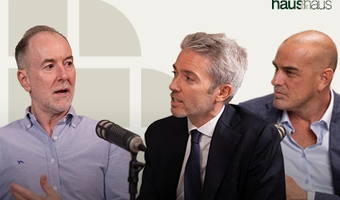
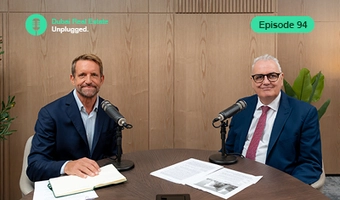
In this episode of Dubai Real Estate Unplugged, Simon Baker, Managing Director, and Steven Leckie, Associate Director at haus & haus, analyse the global factors behind rising foreign investment in Dubai’s property sector.
They discuss how changing economic conditions, currency shifts and investor confidence are positioning the city as one of the best cities to invest in real estate for 2025. Their discussion provides clear real estate investing insights into what is driving the next wave of international buyers.
Key takeaways
- Dubai continues to outperform other global property markets in yield and investment growth.
- Economic stability, tax advantages and infrastructure expansion are driving international confidence.
- Population growth and urban-planning reforms are supporting long term value creation.
- Currency strength and ease of business enhance Dubai’s standing in the global real estate investment landscape.
Global investor sentiment shifts towards Dubai
Throughout the conversation, both speakers underline a consistent theme: global investors are searching for stable returns and asset security. Economic volatility in Europe and Asia has encouraged wealth migration toward regions with dependable growth and transparent regulation. Dubai meets these criteria through its pro-business environment, fixed exchange rate to the US dollar and favourable tax policies.
“Investors are not chasing quick flips anymore. They want markets that can sustain returns over time,” Simon explains. “Dubai ticks that box in almost every way.”
This strategic confidence has positioned Dubai as a top destination within the global real estate investment landscape.
Why invest in Dubai real estate in 2025
Steven explains that Dubai’s growth is not solely tied to property prices but also to its underlying economic fundamentals: population expansion, infrastructure investment and regulatory reforms. With a projected population of 4.5 million by the end of 2025, housing demand is set to rise steadily.
Simon adds that the government’s Vision 2030 initiatives and expanding business licensing schemes continue to attract international companies, bringing professionals and capital with them. These factors combine to reinforce Dubai as a leading destination for Dubai investment real estate.
Comparing returns with other global markets
The hosts compare Dubai’s performance with major international cities. In London, net yields average around 3%; in Singapore and New York, they sit between 2% and 4%. By contrast, Dubai continues to achieve average gross yields of 7-8% across key districts.
“Even after maintenance and service charges, returns remain strong,” Steven says. “That difference is why capital is flowing here from London, Berlin and Hong Kong.”
These figures illustrate why the city ranks among the best cities to invest in real estate, offering a balance of high yields and regulatory transparency.
Where global investors are buying
Simon and Steven highlight several locations where international buyers are most active. Areas such as Dubai Marina, Business Bay and Downtown remain popular for their liquidity and resale potential, while districts like Dubai South, JVC and Tilal Al Ghaf are drawing new foreign interest for Off Plan opportunities and modern infrastructure.
They also note growing attention toward ultra-prime communities such as Palm Jebel Ali and Rashid Yachts & Marina, where global buyers are focusing on long term luxury assets rather than short term speculation.
Capital flow and currency advantage
One of the key drivers discussed is currency performance. Investors from the UK and Europe continue to benefit from favourable exchange rates against the dirham, which remains pegged to the US dollar. This stability not only protects value but also simplifies cross-border transactions and financing for international buyers.
Simon notes that Dubai’s global connectivity and expanding network of investment treaties are increasing confidence among institutional investors seeking portfolio diversification.
Market maturity and long term growth
The conversation concludes with a focus on how Dubai has evolved from a speculative market into a mature investment ecosystem. Enhanced regulation, transparent escrow systems and rising end-user demand have created a foundation for sustained growth and trust.
“We have moved past the days of short term flipping,” Steven explains. “Today’s buyers see Dubai as a core asset within a diversified portfolio.”
This long term perspective marks a critical shift in real estate investing, placing Dubai at the centre of global capital-allocation strategies.