Dubai property market update: what H1 2026 tells us so far
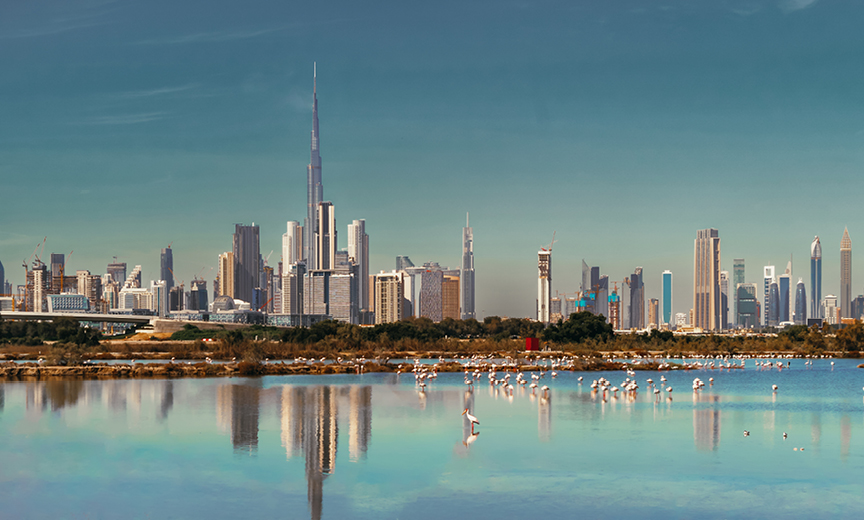
The first half of 2026 has been one of the more unusual periods Dubai real estate has had to absorb in recent years.
Following the Iran-US escalation earlier this year, market sentiment softened quickly. Buyer activity slowed, transactions dipped and both landlords and investors took a more cautious view of what the next few months might look like. At the time, the mood across the market was far more hesitant than the headlines often reflected.
But H1 did not end where it started.
By June, activity had begun to return across several key parts of the market. Buyer registrations improved, tenant demand picked up and Off Plan continued to outperform, reinforcing the sense that confidence in Dubai’s long-term property story has not gone anywhere.
The latest haus & haus H1 Dubai Property Market Report takes a closer look at what happened across sales, Off Plan, leasing and luxury over the first six months of the year, and where the clearest signals of market momentum are now coming from.
Download the full H1 Dubai property market report
Explore the latest data on buyer demand, Off Plan sales, secondary pricing, leasing activity and luxury transactions across Dubai’s property market.
Key takeaways from Dubai’s H1 2026 property market
- Unique buyers on Bayut recovered to 83% of their February baseline
- Rental transactions recovered to 82% of February levels
- Form F sales contracts recovered to 73% of the February baseline
- haus & haus weekly buyer registrations finished 11.1% above January’s peak
- Secondary sales averaged AED 1,681 per sq.ft.
- Off Plan sales averaged AED 1,981 per sq.ft.
| METRIC | H1 2026 Insight |
| Unique buyers recovery | 83% vs February baseline |
| Rental transaction recovery | 82% vs February baseline |
| Form F recovery | 73% vs February baseline |
| Weekly buyer registrations | 11.1% above January peak |
| Secondary average price per sq.ft | AED 1,681 |
| Off Plan average price per sq.ft. | AED 1,981 |
Sales slowed, but prices held firmer than the headlines suggest
There is no getting around the fact that H1 2026 was slower than the same period last year. Transaction volumes across the resale market came in below 2025 levels, reflecting the caution that filtered through the market during the height of geopolitical uncertainty. But the more important takeaway is that pricing did not behave the way many people expected it to.
Across the market, average price per sq.ft. rose year on year from AED 1,782 to AED 1,897. That increase was not driven by a sudden jump in resale pricing. Instead, it reflects the continued strength of Off Plan, where average price per sq.ft. sat at AED 1,981, compared to AED 1,681 across secondary sales.
In other words, fewer resale deals took place, but the deals that did complete were supported by a market that still had pricing discipline. Outside of isolated cases, this was not a period defined by distressed sellers or forced discounts.
That distinction matters. There is a big difference between a market that has slowed and a market that has broken, and H1 2026 looks much more like the former.
Off Plan is still leading Dubai’s market momentum
If there is one theme running through the first half of 2026, it is that Off Plan has remained one of the strongest signals of confidence in Dubai real estate.
Even with sales activity softening across parts of the secondary market, Off Plan continued to command a higher average price per sq.ft. and played a major role in lifting the market-wide average across H1. That tells you something important about buyer behaviour: people are still willing to commit to Dubai’s future.
That confidence is especially notable given the backdrop. During a period where some buyers paused, reassessed or delayed decisions in the resale market, Off Plan continued to attract attention from investors and owner-occupiers looking beyond short-term volatility.
Leasing remained one of the most resilient parts of the market
Leasing followed a similar shape to sales over the first half of the year but held up more convincingly. Total contracts came in 4.8% lower year on year, reaching 272,522, but that topline figure hides a more interesting split underneath.
Apartments still accounted for the vast majority of activity at 247,425 contracts, while villas were the only category to record year-on-year growth, rising 1.2% to 14,618. Townhouses saw the sharpest decline, falling 11.4% to 10,479.
What stands out even more is the strength of new rental contracts. According to DXB Interact, Dubai has already recorded more than 177,000 new contracts year-to-date, with both January and June delivering roughly 18,000 new contracts each.
That helps explain why leasing has recovered faster than some parts of the sales market. It is a lower-commitment decision, but it is also a strong reflection of underlying confidence in the city.
Luxury never really lost momentum
Luxury was one of the clearest examples of how uneven this half-year has been across Dubai real estate. At the start of the year, haus & haus closed a AED 340 million deal on Jumeirah Bay Island, one of the top 10 transactions of the entire half.
As the conflict took hold, the pace of ultra-prime activity slowed, and April passed without a top-tier deal breaking through in the same way.
But that pause did not last.
By June, Dubai’s top end was moving again, and haus & haus closed six deals above AED 18 million in Q2, worth AED 153.9 million combined.
That rebound matters because the luxury market tends to be one of the clearest indicators of where serious capital is willing to commit. H1 showed that demand for top-end stock did not disappear. It simply paused, recalibrated and then resumed.
June may have been the turning point
One of the most interesting parts of the H1 story is how strongly June closed. According to the report, both tenant and buyer activity improved materially towards the end of the half. haus & haus tenant enquiries moved back above January levels in the final week of June, while buyer registrations went one step further and surpassed January’s peak entirely.
That does not mean the market has fully reset, but it does suggest that much of the caution seen through March, April and May may have been more about hesitation than structural weakness. Once confidence began returning, activity moved quickly.
If H1 was defined by uncertainty, June may end up being remembered as the point where the market started to find its footing again.
What H1 2026 means for Dubai’s property market in H2
The first half of 2026 did not produce a simple market story. Sales slowed. Leasing held firmer. Off Plan continued to lead. Luxury paused and then returned. And by the end of June, several of the core demand indicators that had softened earlier in the year were moving back in the right direction.
That leaves H2 in an interesting position. If June’s momentum carries through, the second half of the year could look very different to the first. There is already evidence of buyer and tenant demand rebuilding, and Off Plan remains one of the clearest indicators that long-term confidence in Dubai has not disappeared.
Download the full H1 Dubai Property Market Report
- H1 2026 sales and Off Plan performance
- Secondary vs Off Plan pricing comparisons
- Leasing and rental contract trends
- Luxury market highlights and top-end transactions
- Buyer recovery data and June demand signals