Dubai Metro Gold Line: everything you need to know
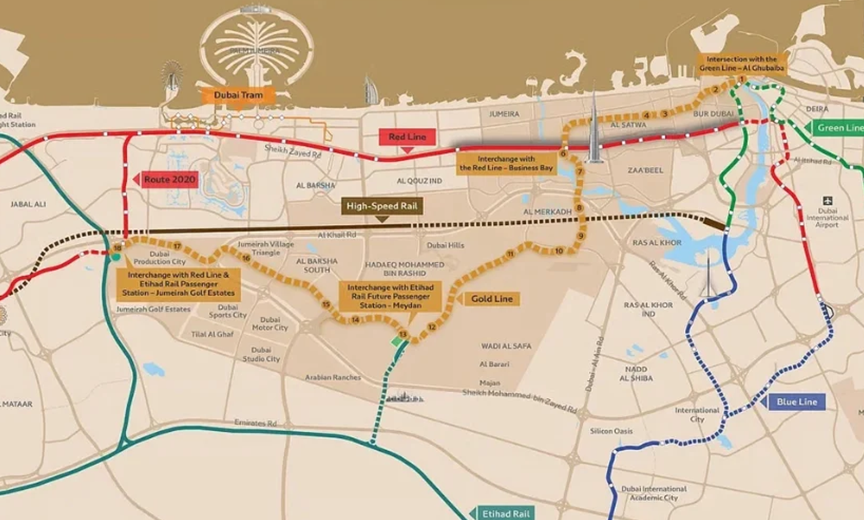
Dubai has approved one of the most ambitious transport projects in its history: the Dubai Metro Gold Line. Set to become the emirate’s first fully underground metro line, the Dubai Metro Gold Line project will add a major new transport corridor across the city, linking historic districts, business hubs, lifestyle destinations and fast-growing residential communities.
For residents, the new line promises easier commutes and stronger citywide connectivity. For property buyers and investors, it adds another important factor to consider when choosing where to live, buy or invest in Dubai.
This guide explains everything you need to know about the Dubai Metro Gold Line, including the route, expected opening date, key communities, Dubai Metro Gold Line map details and potential impact on the property market.
Check Off Plan Properties in Dubai
What is the Dubai Metro Gold Line?
The Dubai Metro Gold Line is a new underground metro route designed to expand Dubai’s public transport network and improve connections between key areas of the city.
The line will run for approximately 42 kilometres and include 18 stations. It will connect with the existing Red and Green Lines and integrate with Etihad Rail, helping to create a more connected transport network across Dubai and the wider UAE.
The project forms part of Dubai’s long term vision for sustainable mobility, urban growth and improved quality of life. It is also closely linked to Dubai’s continued population growth and the development of new residential, commercial and mixed-use communities.
Key facts about the Dubai Metro Gold Line project
Here are the headline details:
- Total investment: around AED 34 billion
- Route length: approximately 42 kilometres
- Number of stations: 18
- Route type: fully underground
- Expected opening date: 9 September 2032
- Areas served: 15 strategic locations
- Expected passengers: up to 465,000 daily riders beyond 2040
- Network impact: Dubai Metro network to expand from 120km to 162km
- Connectivity: links to Red Line, Green Line and Etihad Rail
The scale of the project makes it one of Dubai’s most important infrastructure announcements for the next decade.
Dubai Metro Gold Line map: where will it run?
The Dubai Metro Gold Line map shows a route connecting Old Dubai with several of the city’s major growth corridors.
The line will start at Al Ghubaiba and continue through key areas including Mina Rashid, City Walk, Business Bay, Mohammed Bin Rashid City, Nad Al Sheba, Mohammed bin Rashid Gardens, Meydan, Al Barsha South, Jumeirah Village Circle and Jumeirah Golf Estates.
While the exact station locations may be confirmed in more detail as the project progresses, the route already highlights several areas that could benefit from improved access and stronger long-term demand.
Which areas will the Dubai Metro Gold Line connect?
The Gold Line is designed to connect established districts with emerging communities.
Al Ghubaiba and Old Dubai
Al Ghubaiba will act as a key starting point for the Gold Line and connect with the existing Green Line. This gives the project an important link to Dubai’s historic centre, including Bur Dubai and surrounding heritage areas. For residents and visitors, the connection improves access to one of Dubai’s oldest and most culturally significant districts.
Mina Rashid
Mina Rashid is one of Dubai’s major waterfront redevelopment areas. With residential projects, marina facilities and lifestyle-led planning, improved metro access could support its long term appeal. For buyers, the area offers a different type of waterfront living, close to Old Dubai and well positioned for future connectivity.
City Walk
City Walk is already a popular mixed-use destination with retail, dining, hospitality and residential options. A future Gold Line connection would strengthen its accessibility and make it more convenient for residents, visitors and tenants. This could support continued demand for homes in and around Jumeirah, Al Wasl and central Dubai.
Business Bay
Business Bay is one of Dubai’s most important commercial and residential districts. It already benefits from Red Line access, but the Gold Line will add another layer of connectivity.
For buyers and investors, this strengthens Business Bay’s position as one of the city’s most accessible business hubs, particularly for professionals who want to live close to Downtown Dubai, DIFC and the Dubai Water Canal.
Mohammed Bin Rashid City
Mohammed Bin Rashid City has become one of Dubai’s most active residential and investment zones, with a wide mix of villas, apartments, mansions and Off Plan communities. The Gold Line could support long term demand by improving transport access across a district that continues to grow in scale and visibility.
Nad Al Sheba
Nad Al Sheba is popular with families looking for larger homes, quieter surroundings and access to central Dubai. Improved metro connectivity could make the area more attractive for residents who want villa-style living without feeling disconnected from the wider city.
Meydan
Meydan is expected to become a key interchange point, with links to Etihad Rail. This makes it one of the most strategically important locations on the future route. For investors, the combination of residential growth, leisure infrastructure and national rail connectivity gives Meydan a strong long term story.
Al Barsha South
Al Barsha South is a well-positioned residential area close to schools, healthcare, leisure destinations and established road networks. A future metro connection could improve its appeal for families and tenants who want practical access to key parts of Dubai.
Jumeirah Village Circle
Jumeirah Village Circle, also known as JVC, is one of Dubai’s most active residential communities. It is popular with tenants, first-time buyers and investors because it offers a wide range of apartments, townhouses and villas at comparatively accessible price points. Metro access has long been one of the main missing pieces for JVC. The Gold Line could significantly improve connectivity and further support the area’s long term residential and investment appeal.
Jumeirah Golf Estates
Jumeirah Golf Estates will be one of the major connection points on the Gold Line, linking with the Red Line and Etihad Rail. Known for premium villas, golf course living and a family-focused lifestyle, the area could benefit from improved transport access while maintaining its established residential appeal.
When will the Dubai Metro Gold Line open?
The Dubai Metro Gold Line is scheduled to open on 9 September 2032. The project timeline includes tender issuance in 2026, contract award in 2027 and construction beginning after that. Once complete, the Gold Line will expand the Dubai Metro network by around 35%.
Although 2032 may seem some time away, major infrastructure projects can influence property decisions years before completion. Buyers often start looking at future connectivity early, particularly in areas expected to receive metro access for the first time.
Why the Dubai Metro Gold Line matters for property buyers
Transport infrastructure can have a major effect on how people choose where to live. For residents, metro access can mean shorter commutes, less reliance on cars and easier movement across the city. For investors, it can support rental demand, occupancy and long term resale appeal.
The Dubai Metro Gold Line matters because it will serve areas that are already important to Dubai’s property market, while also improving access to communities still in their growth phase.
This is especially relevant for end users choosing a long term home, investors looking for rental demand, buyers considering Off Plan communities, landlords assessing future tenant appeal, and residents comparing connected and car-dependent areas.
Check Off Plan Properties in Dubai
How could the Dubai Metro Gold Line affect property prices?
The Gold Line could support demand in areas close to future stations, particularly where metro access is currently limited.
In Dubai, transport connectivity is often an important factor for tenants and buyers. Properties close to metro stations can appeal to professionals, students, young families and residents who want easier access to work, retail and leisure destinations.
The strongest impact may be seen in communities gaining metro access for the first time, such as JVC, Meydan, Nad Al Sheba, Al Barsha South and parts of Mohammed Bin Rashid City.
That does not mean every property in these areas will automatically increase in value. The best-performing homes are still likely to be those with the right pricing, layout, building quality, amenities, service charges and proximity to actual station locations once confirmed.
What does the Dubai Metro Gold Line mean for investors?
For investors, the Gold Line adds another layer to location analysis. Instead of looking only at current rental yields or sales prices, buyers should also consider how future connectivity could change tenant behaviour over time.
Areas that may benefit most are likely to be those with strong existing residential demand, limited current public transport access, large future population growth, active Off Plan development, good road connectivity already in place, practical access to business and lifestyle hubs, and a future station within a convenient distance.
Investors should pay close attention to master-planned areas along the route, especially where the Gold Line supports an already strong demand story.
Which property areas could benefit most?
Several communities could benefit from the Dubai Metro Gold Line project.
Jumeirah Village Circle
JVC could be one of the most watched areas because it is already popular with renters and investors but has historically relied heavily on road access. A future metro connection could improve its appeal for tenants and support long term demand.
Meydan and MBR City
Meydan and Mohammed Bin Rashid City are major growth areas with a significant pipeline of residential communities. Improved connectivity could support both end-user demand and investor confidence, particularly in well-located developments.
Business Bay
Business Bay already has strong connectivity, but an additional metro line could make it even more attractive for professionals and companies. This may support both rental demand and long term liquidity.
Mina Rashid
Mina Rashid could benefit from stronger access as it develops into a more mature waterfront destination. Improved transport links may help connect the area more effectively with both Old Dubai and central districts.
Jumeirah Golf Estates
Jumeirah Golf Estates is already a premium residential community. A Gold Line and Etihad Rail connection could improve its accessibility and strengthen its appeal for buyers who want space, lifestyle and better transport options.
Dubai Metro Gold Line and Off Plan property
The Dubai Metro Gold Line could become especially relevant for Off Plan buyers.
Many of the areas along the planned route include active or future development zones. For buyers entering early, improved connectivity may support long term demand as communities mature.
However, Off Plan investors should still assess each project carefully. The right opportunity should have a reputable developer, sensible pricing, a clear payment plan, strong location fundamentals and realistic demand after handover.
The Gold Line can add confidence to an area’s long term outlook, but the individual project still needs to make sense.
Should buyers act before the Gold Line opens?
For buyers and investors, the answer depends on the area, property type and price. Infrastructure announcements can create early interest, but smart property decisions should still be based on fundamentals. A future metro connection is a positive factor, but it should not be the only reason to buy. Before making a decision, consider:
- Current property prices
- Rental demand today
- Future supply in the area
- Distance from the expected metro route
- Developer reputation
- Building quality
- Service charges
- Community maturity
- Long term resale appeal
The most attractive opportunities are usually those where future connectivity supports an already strong property case.
What to look for in an Off Plan property near the Gold Line
When comparing Off Plan properties near the Dubai Metro Gold Line, investors should look beyond the route announcement and focus on the fundamentals.
A strong opportunity should offer good proximity to the future station, but also a reputable developer, a sensible payment plan, realistic pricing, efficient layouts, strong amenities and clear tenant demand after handover.
It is also worth considering how the project’s completion date lines up with the wider infrastructure timeline. If a property is handed over before the Gold Line opens, investors should understand the rental market today. If the handover is closer to 2032, the future connectivity story may become a stronger part of the resale and leasing appeal.
The strongest opportunities are likely to be in areas where the Gold Line supports an already positive investment case, rather than being the only reason to buy.
FAQs about Dubai Metro Gold Line
The Dubai Metro Gold Line is a planned 42km underground metro route that will connect 15 strategic areas across Dubai. It will include 18 stations and link with the Red Line, Green Line and Etihad Rail.
The Dubai Metro Gold Line is scheduled to open on 9 September 2032.
The Dubai Metro Gold Line map shows the planned route from Al Ghubaiba to Jumeirah Golf Estates, passing through areas including Mina Rashid, City Walk, Business Bay, MBR City, Nad Al Sheba, Meydan, Al Barsha South and JVC. Exact station positions may be confirmed in more detail as the project progresses.
The Dubai Metro Gold Line is expected to have 18 stations.
Areas expected to benefit include Al Ghubaiba, Mina Rashid, City Walk, Business Bay, Mohammed Bin Rashid City, Nad Al Sheba, Meydan, Al Barsha South, Jumeirah Village Circle and Jumeirah Golf Estates.
Yes, the Gold Line is expected to connect with Etihad Rail at Meydan and Jumeirah Golf Estates.
The Gold Line could support demand in areas close to future stations, particularly where metro access is currently limited. However, property performance will still depend on price, quality, location, supply, rental demand and proximity to confirmed station locations.
Buying near the planned Gold Line could be attractive if the property also has strong fundamentals, such as good pricing, quality, amenities, tenant demand and resale potential. Future metro access should be seen as one factor in a wider investment decision.
Speak to haus & haus about property near the Dubai Metro Gold Line
The Dubai Metro Gold Line is set to become one of the city’s most important infrastructure projects, connecting established districts with fast-growing residential and investment areas.
For buyers, renters and investors, it is a project worth watching closely.
Whether you are considering property in JVC, Business Bay, MBR City, Meydan, Mina Rashid or Jumeirah Golf Estates, the haus & haus team can help you understand current opportunities and long-term potential.
Speak to one of our Dubai property consultants today to explore homes and investment opportunities along the future Dubai Metro Gold Line route.